Recipe · Rolls & More
Fresh Milled Pesto and Mozzarella Pull-Apart Loaf
By: Eleen Beisner
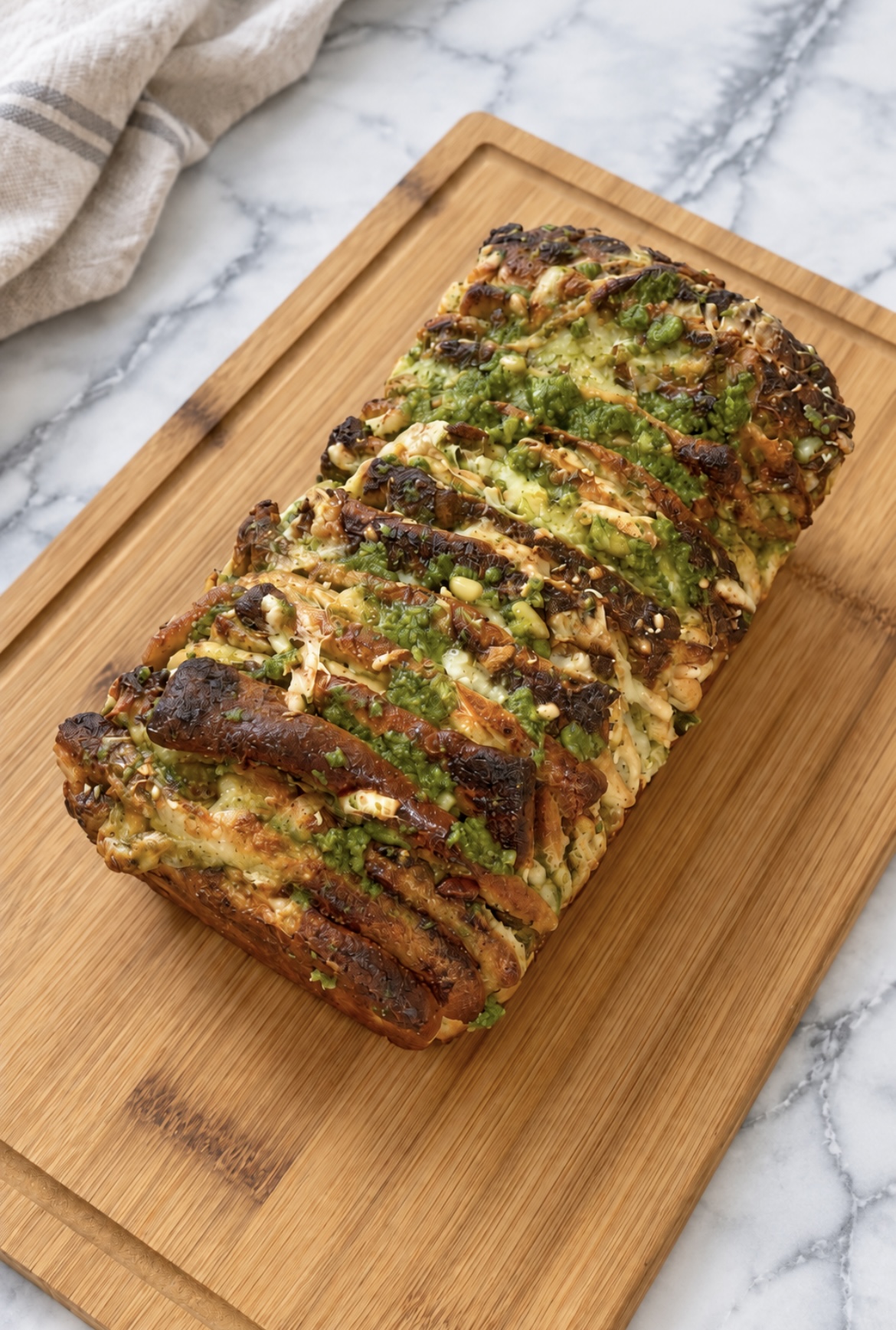
This soft potato brioche loaf is layered with basil pesto, mozzarella, and Parmesan, then finished with warm pesto butter. Each cheesy layer pulls away from the loaf, making it perfect for serving alongside dinner or as a savory appetizer.
Prep time: 3–4 hours · Bake time: 30–35 minutes · Yields: 1 loaf (12 portions), 5 × 9-inch pan
Ingredients
Potato Brioche Dough
- 360 g fresh milled hard white wheat flour (approximately 3 cups)
- 25 g plain instant potato flakes (approximately ½ cup, depending on the brand)
- 170 g whole milk (approximately ⅔ cup plus 2 teaspoons)
- 60 g water (¼ cup), plus up to 20 g more if needed
- 50 g egg (1 large egg)
- 21 g honey (1 tablespoon)
- 56 g unsalted butter (¼ cup)
- 5 g instant yeast (approximately 1⅔ teaspoons)
- 8 g fine salt (approximately 1⅓ teaspoons)
- 2 g garlic powder (approximately ¾ teaspoon)
- 1 g onion powder (approximately ½ teaspoon)
Pesto and Cheese Filling
- 110 g thick, high-quality basil pesto (approximately ⅓ cup plus 2 tablespoons)
- 140 g low-moisture whole-milk mozzarella, freshly shredded (approximately 1¼ cups)
- 45 g Parmesan, finely grated (approximately ½ cup), divided
- 0.5 g crushed red pepper flakes (approximately ¼ teaspoon), optional
- Black pepper, to taste
Pesto-Butter Finish
- 14 g unsalted butter (1 tablespoon)
- 15 g high-quality basil pesto (approximately 1 tablespoon)
- Flaky salt, for finishing
Instructions
Prepare the Butter Mixture
Melt the 56 g butter in a small saucepan over low heat. Remove the pan from the heat and whisk in the milk, water, honey, potato flakes, salt, garlic powder, and onion powder.
Let the mixture cool until it is comfortably warm rather than hot. Whisk in the egg. The mixture must not be hot enough to cook the egg or damage the yeast that will be added later.
Hydrate the Flour
Place the freshly milled flour in the bowl of a stand mixer fitted with a dough hook. Pour the warm butter mixture over the flour.
Mix on low speed until no dry flour remains. Cover the bowl and let the mixture rest for 25–30 minutes.
Add the Yeast
Sprinkle the instant yeast over the rested dough. Knead on low speed until the yeast is fully incorporated.
Continue kneading until the dough becomes smooth, stretchy, and slightly tacky. This may take approximately 12–20 minutes.
If the dough feels stiff or dry, add the reserved water 5 g at a time. Allow each addition to mix completely into the dough before adding more. The dough should be very soft but still able to hold its shape.
Let the Dough Rise
Cover the bowl and let the dough rise until it is puffy and approximately 75% larger. This will generally take 60–90 minutes, depending on the warmth of the room.
Avoid waiting for the dough to fully double.
Prepare the Pan and Filling
Grease a 5 × 9-inch loaf pan. Line the pan with parchment paper, leaving enough overhang along the long sides to lift out the baked loaf.
Combine the mozzarella with 35 g of the Parmesan. Reserve the remaining 10 g Parmesan for the top of the loaf.
Roll and Fill the Dough
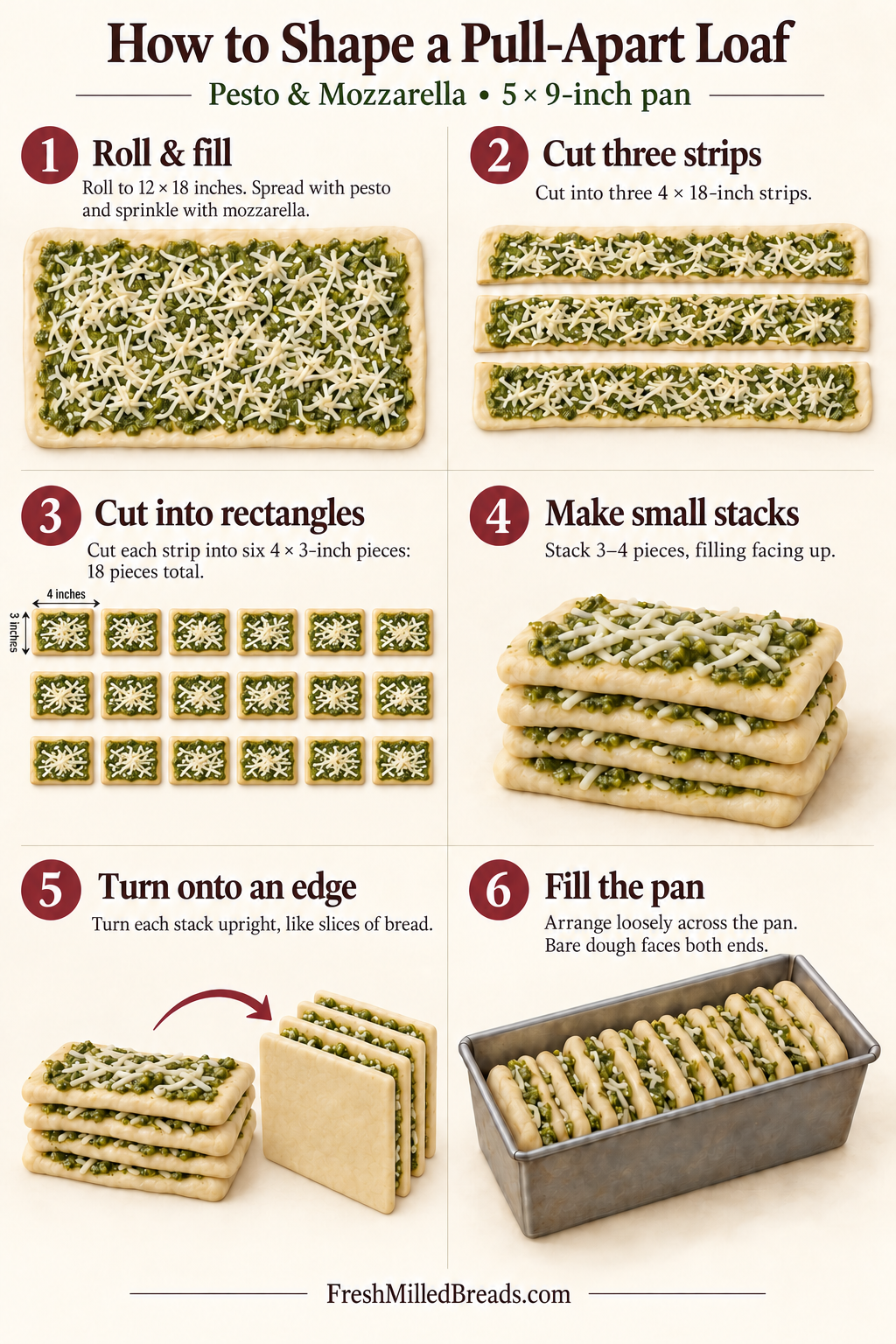
Place the dough on a lightly oiled work surface. Roll it into a 12 × 18-inch rectangle.
Spread the 110 g pesto evenly over the dough, leaving approximately ½ inch bare around the edges. Sprinkle the mozzarella and Parmesan mixture evenly over the pesto.
Add the crushed red pepper flakes and black pepper, if using.
Cut the Dough
Cut the dough lengthwise into three 4 × 18-inch strips.
Cut each strip into six 4 × 3-inch rectangles. You should have 18 rectangles altogether.
Stack the Pieces
Arrange the rectangles into small stacks of three or four pieces, keeping the filling facing upward as you stack them.
Turn each stack upright onto its long 4-inch edge. The pieces should stand approximately 3 inches tall, with the 4-inch side extending across the width of the loaf pan.
Arrange the Dough in the Pan
Place the upright stacks loosely in the prepared pan so they resemble slices of bread. Continue adding the stacks along the length of the pan without pressing them tightly together.
Turn the first and last pieces so bare dough faces the ends of the pan. This helps prevent the pesto and cheese from sticking to the pan.
Let the Loaf Rise
Cover the pan loosely and let the dough rise until the layers look puffy, the spaces between them have mostly filled, and the top of the dough is approaching the rim of the pan.
This will generally take 35–60 minutes.
While the loaf rises, preheat the oven to 375°F.
Bake the Loaf
Place the loaf pan on a rimmed baking sheet to catch any cheese or pesto that may bubble over. Position the baking sheet in the bottom third of the oven.
Bake at 375°F for 30–35 minutes. After 15 minutes, loosely tent the loaf with foil to prevent the top from browning too much, then continue baking until done.
The bread should be deeply golden and the dough in the center should register approximately 190–195°F. Insert the thermometer into the bread itself rather than into a pocket of melted cheese.
Add the Pesto-Butter Finish
While the loaf bakes, melt the remaining 14 g butter. Stir in the 15 g pesto.
Brush the pesto butter over the loaf immediately after it comes out of the oven. Sprinkle with the reserved 10 g Parmesan and a small pinch of flaky salt.
Cool the Loaf
Let the bread cool in the pan for 15 minutes. Use the parchment paper to carefully lift it from the pan.
Let it cool for another 10–15 minutes before pulling apart the layers.
Baker's Notes
Choosing Pesto
The quality of the pesto makes a noticeable difference in this loaf. Choose a thick, flavorful pesto made with basil, Parmesan, garlic, olive oil, and nuts. Avoid pesto that tastes mostly oily or has very little basil flavor.
The pesto will mellow as it bakes, so it should taste bold and well seasoned before it is added to the dough. Refrigerated pesto often has a fresher, brighter flavor than shelf-stable pesto.
If the pesto has a large amount of oil sitting on top, stir it thoroughly and spoon off any obvious excess before spreading it over the dough. Excess oil can cause the layers to slide apart or leave the center of the loaf heavy.
Storing & Freezing
Storing
Store the cooled loaf in an airtight container in the refrigerator for up to 4 days because of the cheese and pesto. Reheat individual portions at 325°F for approximately 8–10 minutes, or until warmed through. The microwave will soften the bread but will not restore the lightly crisp edges.
Freezing
Wrap the cooled loaf or individual portions securely and freeze for up to 2 months. Thaw in the refrigerator overnight before reheating.
Nutrition Information
About 12 servings per recipe · Serving size: 1 pull-apart portion (1/12 loaf, approximately 80 g)
Calories: 265
- Total fat: 14 g
- Saturated fat: 6.5 g
- Trans fat: 0 g
- Cholesterol: 40 mg
- Sodium: 520 mg
- Total carbohydrate: 27 g
- Dietary fiber: 3.5 g
- Total sugars: 3 g
- Added sugars: 1.5 g
- Protein: 10 g